


 EN


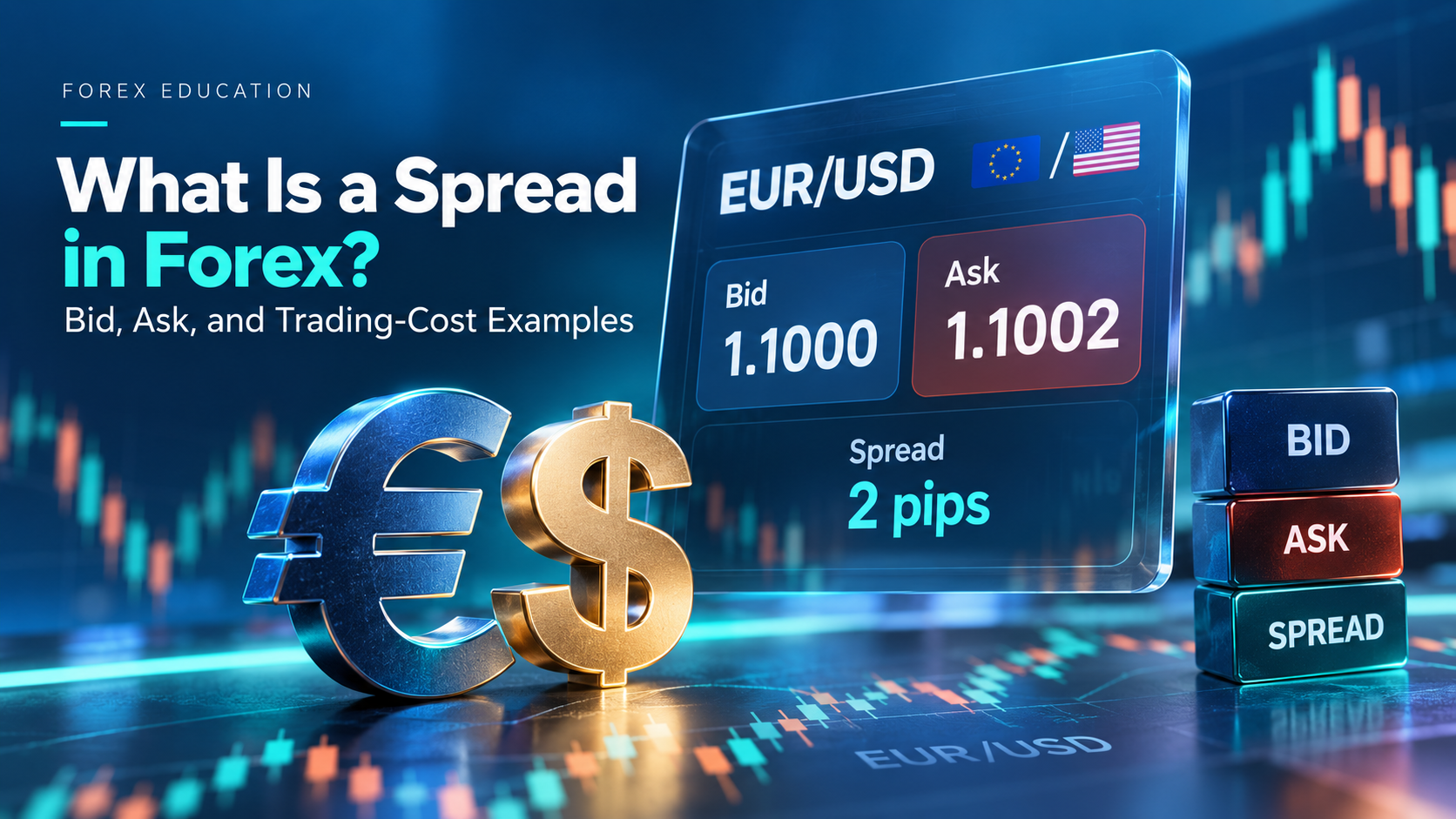
A forex spread is the difference between the bid price and the ask price of a currency pair. The bid is the price at which a trader can sell, while the ask is the price at which a trader can buy. Because the ask is normally higher than the bid, a newly opened position generally begins with an unrealised loss reflecting the bid-ask spread, assuming the quoted prices remain unchanged.
What Is a Spread in Forex?
In simple terms, the spread is the gap between the two prices quoted for a currency pair.
For example, suppose EUR/USD is quoted at:
|
Price |
Quote |
|
Bid |
1.1000 |
|
Ask |
1.1002 |
|
Spread |
0.0002 |
For EUR/USD, where one pip is typically 0.0001, the 0.0002 difference equals 2 pips.
The spread matters because it affects the price at which a position can be opened and closed. Therefore, it is one of the first trading costs a forex trader should understand.
However, the spread is not the only possible cost of trading. Depending on the account, instrument, entity, and trading conditions, other charges can include commission, overnight financing or swap, and currency conversion costs. Always check the applicable product and account documentation before trading.
Bid Price vs Ask Price: What Is the Difference?
The two sides of a forex quote serve different purposes.
What Is the Bid Price?
The bid is the price at which you can sell the quoted instrument. If you open a short position at the current market price, the transaction is generally executed at the bid, subject to the applicable execution conditions.
What Is the Ask Price?
The ask is the price at which you can buy. If you open a long position at the current market price, the transaction is generally executed at the ask, subject to the applicable execution conditions.
Why Is the Ask Higher Than the Bid?
The difference between the bid and ask is the spread. A simple quote might look like 1.1000 / 1.1002, where 1.1000 is the bid and 1.1002 is the ask.
How Is the Forex Spread Calculated?
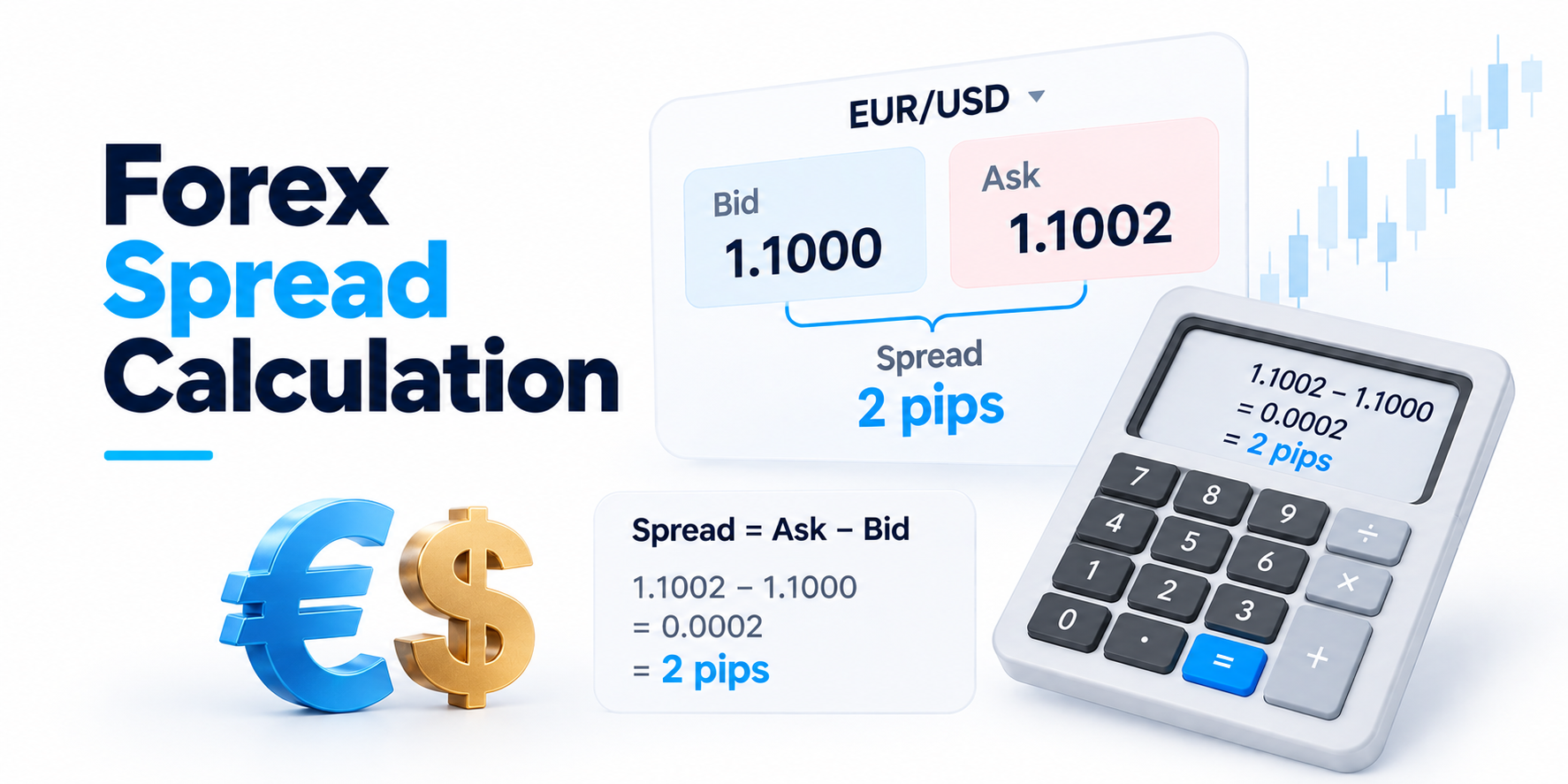
The basic formula is:
Spread = Ask Price − Bid Price
To express the result in pips:
Spread in Pips = (Ask Price − Bid Price) ÷ Pip Size
For a hypothetical EUR/USD quote of 1.1000 / 1.1002:
Spread = 1.1002 − 1.1000 = 0.0002
Because the pip size is 0.0001:
Spread = 0.0002 ÷ 0.0001 = 2 pips
For JPY pairs, the conventional pip size is typically 0.01 rather than 0.0001. Therefore, traders should check the quotation convention for the currency pair they are calculating.
How Much Does a Forex Spread Cost?
The monetary effect of a spread depends on the spread in pips and the value of each pip for the position size.
A simplified calculation is:
Estimated Spread Cost ≈ Spread in Pips × Pip Value
For a hypothetical EUR/USD trade:
- Position size: 1 standard lot
- Hypothetical spread: 2 pips
- Hypothetical pip value: $10 per pip
- Estimated spread cost: 2 × $10 = $20
This is a simplified educational calculation, not a quote or guarantee of actual trading costs. Pip value depends on the currency pair, exchange rate, account currency, and position size. Learn more about pip value and calculation in our detailed guide.
What Is a Fixed Spread vs a Floating Spread?
Spreads can be described as fixed or floating, depending on how the trading price is provided.
Floating Spreads
Floating spreads can widen or narrow as market conditions change. As a result, spreads can change with liquidity, volatility, and other market factors.
During periods of high volatility, major economic announcements, or reduced liquidity, the difference between bid and ask can become larger.
Therefore, a spread observed at one time should not automatically be treated as the spread that will apply later.
Fixed Spreads
A fixed spread is generally quoted at a predetermined level under specified trading conditions. However, traders should check the relevant account and product terms because exceptions, execution conditions, or other charges may apply.
What Causes Forex Spreads to Widen?
Several market factors can influence the bid-ask spread.
Market Volatility
When prices move rapidly, liquidity providers may adjust their quotes. As a result, spreads can widen.
Liquidity
Highly liquid currency pairs often have deeper trading activity, while less liquid pairs can have wider spreads. Liquidity can also change during different trading sessions.
Economic News
Major economic releases, central-bank decisions, and unexpected geopolitical developments can cause sharp price movements. Consequently, spreads may change around these events.
Market Hours
Liquidity conditions are not identical throughout the trading day. The overlap between major financial centres can attract substantial activity, while quieter periods may have different pricing conditions.
Why Does the Spread Matter for Short-Term Trading?
Spread can have a larger relative impact on strategies that seek small price movements or involve frequent entries and exits.
Consider two hypothetical strategies:
|
Scenario |
Spread |
Target Move |
Spread as % of Target |
|
A |
1 pip |
20 pips |
5% |
|
B |
3 pips |
20 pips |
15% |
In Scenario A, the spread represents 5% of the hypothetical target move. In Scenario B, it represents 15%.
For longer-term positions, spread may represent a smaller proportion of the expected market movement. Even so, traders should consider all applicable costs rather than focusing on spread alone.
Spread vs Commission: Are They the Same?
No. A spread and a commission are different types of trading costs.
The spread is built into the difference between the bid and ask prices. A commission, where applicable, is a separate charge that may be calculated according to the account, instrument, or trading volume.
Some trading accounts may advertise low or zero spreads while applying a commission. Other accounts may incorporate more of the trading cost into the spread. Therefore, comparing accounts only by their headline spread can give an incomplete picture.
Spread vs Swap: What Is the Difference?
Spread and swap affect a trade in different ways.
The spread is associated with the bid-ask difference when entering or exiting a position. Swap, also called overnight financing or rollover, relates to the cost or credit associated with holding an eligible position overnight under the applicable trading terms.
For example, a trader may open a position with a 2-pip spread and then hold it overnight. The spread and any applicable overnight financing are separate considerations.
Therefore, traders should check both entry costs and ongoing holding costs when evaluating a strategy.
How Can Traders Check the Spread Before Trading?
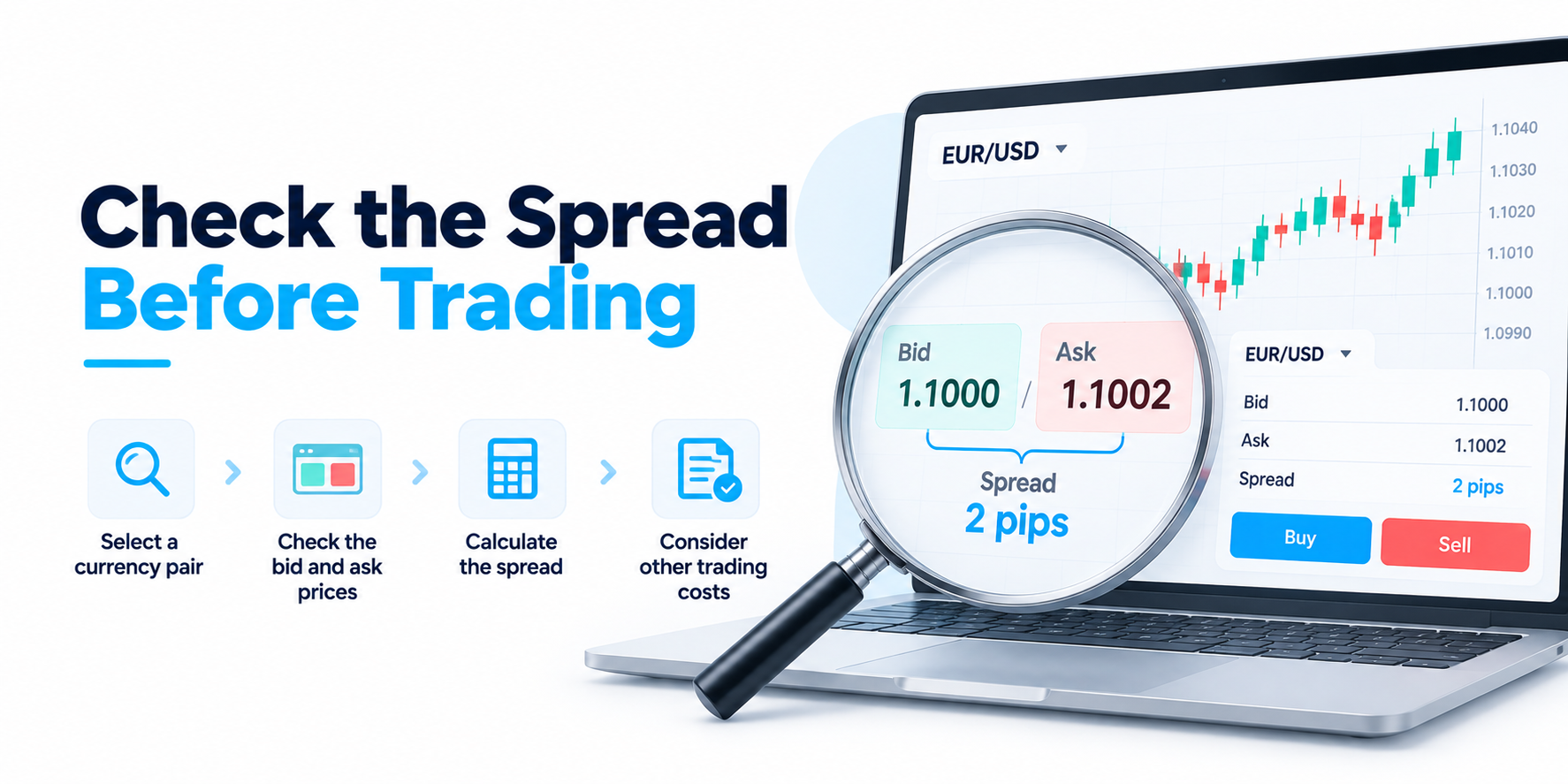
Before placing a trade, a trader can review the current bid and ask prices shown for the instrument on the trading platform.
A practical process is:
1. Select the currency pair.
2. Check the current bid and ask prices.
3. Subtract the bid from the ask.
4. Convert the difference into pips using the applicable pip size.
5. Consider the position size to estimate the spread component of the trading cost.
6. Check whether commission, swap, or other charges also apply.
7. Recheck the conditions if the market becomes unusually volatile.
This process helps separate the quoted spread from other costs.
Traders can also use a demo environment to practise reading bid and ask prices and calculating hypothetical spread costs before using real funds. CPT Markets offers a Demo Account with virtual funds and live market data for this purpose. Features and availability may vary by entity and jurisdiction.
Practical Example: Reading a EUR/USD Quote
Suppose a hypothetical platform displays:
EUR/USD: 1.1050 / 1.1053
Assume:
- Bid = 1.1050
- Ask = 1.1053
- Pip Size = 0.0001
The spread is:
1.1053 − 1.1050 = 0.0003
Therefore:
0.0003 ÷ 0.0001 = 3 pips
If the hypothetical position has a pip value of $10, the spread component would be approximately $30.
Now suppose the trader buys at 1.1053 and the quote remains unchanged. If the position were closed immediately, the relevant closing price would be the bid, 1.1050. The 3-pip difference illustrates the initial spread effect, before considering commissions, financing, slippage, or other applicable costs.
This example is hypothetical and does not represent a CPT Markets quote.
Common Mistakes When Comparing Forex Spreads
Looking Only at the Lowest Advertised Spread
A headline spread does not necessarily represent the total cost of trading. Check whether commissions, financing, or other charges apply.
Assuming the Spread Never Changes
Floating spreads can change with market conditions. Therefore, a spread shown at one moment may not be available later.
Confusing Pips with Pip Value
A pip measures a price movement, while pip value expresses how much that movement is worth for a particular position. They are related, but they are not the same thing.
Ignoring Position Size
The same spread in pips can have a different monetary impact at different position sizes. Consequently, cost comparisons should consider the size of the intended trade.
Treating a Low Spread as a Profit Guarantee
A lower transaction cost does not eliminate market risk. Prices can move against a position, and leveraged CFD trading can result in rapid losses.
Key Takeaways
- The spread is the difference between a currency pair's ask and bid prices.
- The bid is generally the price at which you can sell, while the ask is the price at which you can buy.
- Spread can be expressed in pips and can be converted into an estimated monetary cost using pip value.
- Floating spreads can change with volatility, liquidity, news, and market conditions.
- Spread is only one potential trading cost; commission, swap, and currency conversion may also apply.
- A narrower spread can reduce the initial trading-cost gap, but it does not guarantee a profitable trade.
- Always check the applicable account, instrument, and jurisdictional terms before trading.
FAQs
What Is a Good Spread in Forex?
There is no single spread that is universally “good.” The appropriate benchmark depends on the currency pair, account structure, market conditions, position size, and trading strategy. A trader should compare the total applicable trading cost rather than looking at the spread alone. Floating spreads can also change during volatile or less liquid market conditions.
Is the Spread a Trading Fee?
The spread is a trading cost, but it is not necessarily a separate fee charged to an account. It is the difference between the bid and ask prices. Depending on the account and instrument, a broker may also apply separate charges such as commission, overnight financing, or currency conversion costs.
Why Does the Spread Change?
Spreads can change because market liquidity and volatility change. Major economic announcements, unexpected news, and periods of reduced liquidity can lead to wider bid-ask differences. With a floating spread, the quote can therefore differ from one moment to another. Traders should check current pricing rather than relying on a historical or advertised snapshot.
Is a 1-Pip Spread Always Better Than a 3-Pip Spread?
Not necessarily. If all other costs and trading conditions were identical, a narrower spread would represent a smaller bid-ask gap. However, real account comparisons can involve different commissions, financing charges, instruments, or execution conditions. Therefore, traders should compare the overall cost and relevant terms instead of using spread alone.
How Do I Calculate Spread in Pips?
Subtract the bid from the ask, then divide the result by the applicable pip size. For example, with EUR/USD at 1.1000 bid and 1.1002 ask, the difference is 0.0002. Dividing by 0.0001 gives a 2-pip spread. JPY pairs typically use a 0.01 pip size.
Does Spread Affect Profit and Loss?
Yes. The bid-ask difference affects the price at which a position can be opened and closed. For a long position opened at the ask, the bid price would generally need to rise sufficiently above the entry price before the position becomes profitable, excluding other applicable costs. Other charges can also affect the final result.
